One question comes up more than any other: “What size inverter do I need for my 3-bedroom flat?” And close behind it, which battery to pair with it — tubular, dry cell, or lithium.
The answer always starts in the same place: your load. Not the size of your flat, not what your neighbour installed — the appliances you actually intend to run, and for how long.
Start with what you want to power
Take a typical 3-bedroom flat running:
- A television
- A decoder
- One energy-efficient refrigerator
- Two ceiling fans
- A few energy-saving bulbs
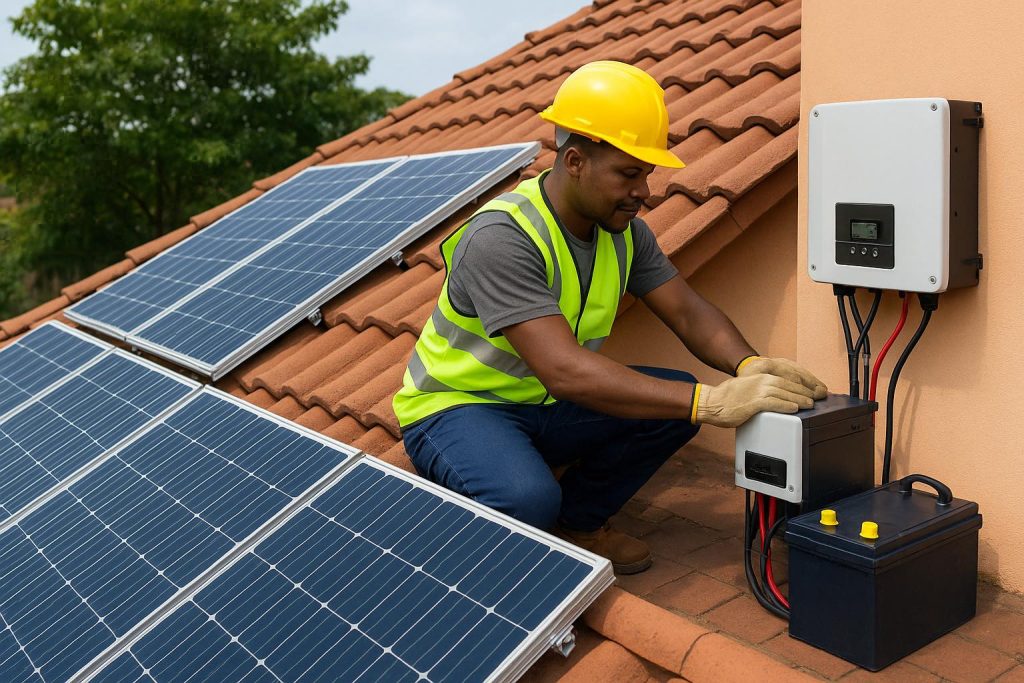
For that load, a 3.5kVA/24V inverter with two tubular batteries and four 450W monocrystalline panels serves comfortably — running through the evening and recharging the next day.
This is a starting point, not a universal answer. Add an air conditioner, a pumping machine, a microwave or a freezer and both the inverter rating and the battery bank have to grow with it.
How to size it properly
- List every appliance you want on backup, with its wattage.
- Add the wattages for everything that may run at the same time.
- Allow for surge — fridges, pumps and air conditioners draw several times their running wattage at start-up.
- Decide your backup hours — this determines battery capacity, not inverter size.
- Add headroom — size for about 70–80% of the inverter’s rating so it never runs at its limit.
Our inverter load calculator does steps one to three for you, and the battery run-time calculator handles step four.
Which battery type?
- Tubular — excellent value for deep, regular cycling; needs a ventilated space and occasional topping up
- Dry cell (sealed) — maintenance-free and tolerant of indoor installation, generally shorter cycle life
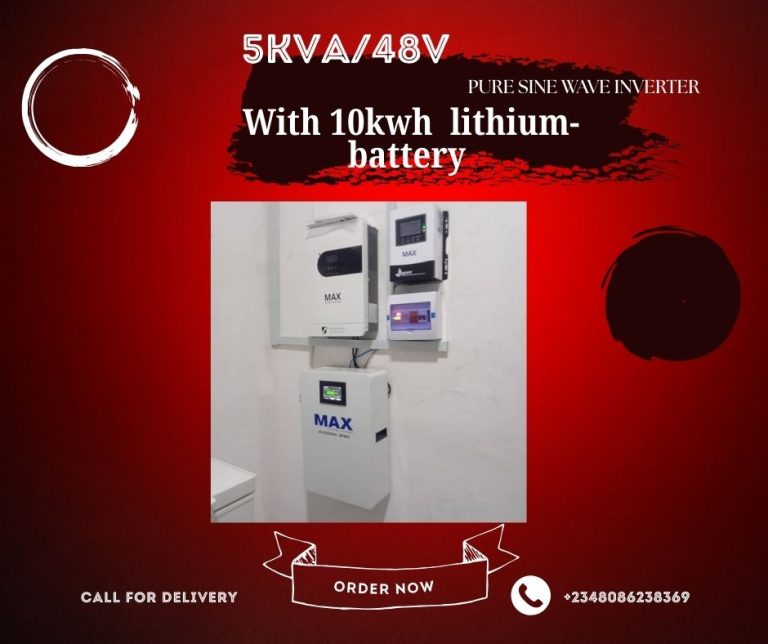
- Lithium — longest life, lightest, deepest usable capacity, highest upfront cost — and the cheapest per cycle over ten years
Manage your load and the system lasts longer
The habit matters as much as the hardware. Keep heavy appliances off the inverter, switch off what you are not using, and avoid draining batteries flat — that alone can add years to a battery bank.
Frequently asked questions
Can a 3.5kVA inverter run an air conditioner?
A small inverter-type AC, yes — but it will dominate the load and shorten backup time considerably. If air conditioning is a priority, size upward from the start.
How many batteries do I need?
That depends on backup hours, not inverter size. Two tubular batteries suit a modest evening load; longer autonomy or heavier appliances need four or more.
Do I need solar panels straight away?
No. Many customers start with inverter and batteries charging from the grid, then add panels later. Just make sure the inverter you buy supports solar input.
Start small, start smart
You do not need to spend everything at once. Get the sizing right, buy quality, and expand as your needs grow.
Send us your appliance list and we will size the system properly, or browse inverters and batteries in our store.